
 AntoineAsphalt.ca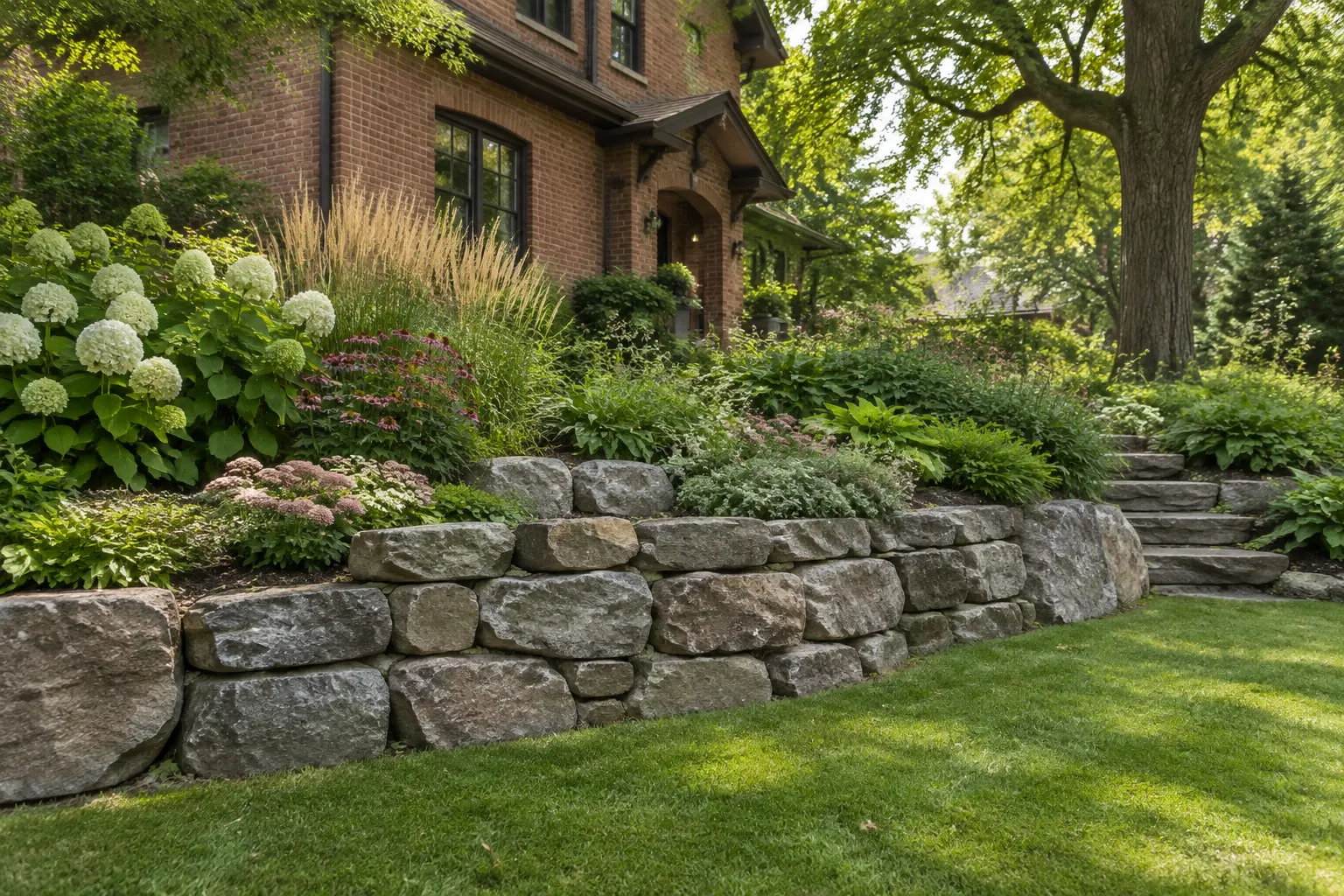
Retaining walls · Hamilton & Halton
Natural Stone & Boulder Retaining Walls in Hamilton & Burlington
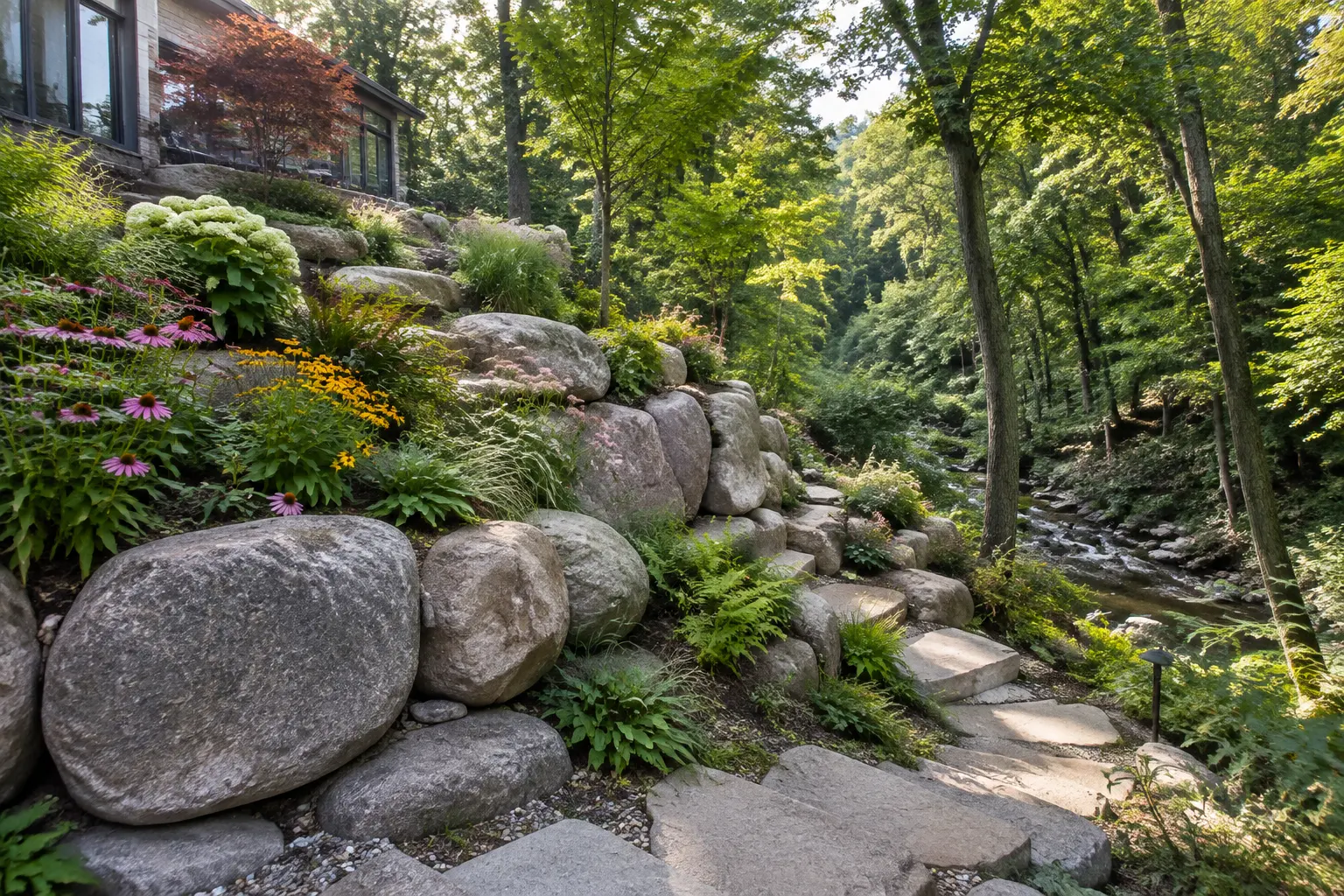
Natural stone walls use hand-fitted fieldstone, flagstone, ledgestone or large boulders to follow the land rather than impose a rigid pattern. The result feels established, organic and closely connected to the planting around it.
Natural stone walls use hand-fitted fieldstone, flagstone, ledgestone or large boulders to follow the land rather than impose a rigid pattern. The result feels established, organic and closely connected to the planting around it.
Last updated: September 2026 · Reviewed by Joseph Antoine, OwnerWhen to choose natural stone & boulder
Advantages and considerations
Why homeowners choose it
Every wall is visually unique
Pairs naturally with planting
No manufactured repetition
Large boulders can manage meaningful grade changes
What to plan for
Irregular stone needs skilled hand-fitting
Cost varies significantly by stone source
Smaller dry-stack stone is generally suited to lower walls
Styles and materials
- Dry-stacked fieldstone
- Flagstone and ledgestone
- Large natural boulders
- Mixed stone with planted joints
How we build it
Read the natural contours and choose stone scale
Excavate and prepare a compacted base
Sort stone by depth, face and bearing points
Hand-fit each course with stable contact
Create free-draining stone zones behind the wall
Blend final grades and planting into the surrounding landscape
Related retaining-wall types
Retaining walls by city
Helpful guides
What’s included in every quote
- Site assessment
- Written itemized quote
- Drainage plan
- Permit and engineering check
- Final cleanup
Natural Stone & Boulder walls across Hamilton and Halton
We assess and build retaining-wall projects in Hamilton, Ancaster, Burlington and Oakville, including neighbourhoods with clay soils, escarpment grades and constrained urban access.
Hamilton
Burlington
Oakville
Natural Stone & Boulder FAQ
Is natural stone suitable for retaining soil?
Yes, when the stone size, base, wall geometry and drainage suit the height and site conditions.
What stones can you use?
Options include fieldstone, flagstone, ledgestone and large boulders, selected to suit the architecture and required structure.
Why does hand-fitting matter?
Stable bearing points and overlapping joints help loads travel through the wall. Poorly fitted stone can rock, open gaps or lose alignment.
Can plants grow around the wall?
Yes. Planting pockets and carefully selected trailing or alpine plants can soften the wall without compromising drainage.
Site-specific planning
Plan a wall that works with your property.
Free site assessment and clear recommendations. Call (647) 459-7775.