
 AntoineAsphalt.ca
Retaining wall field guide
Retaining Wall Permits in Hamilton, Burlington & Oakville
A retaining wall is a designated structure under Ontario rules when it exceeds 1 metre in exposed height and is beside public property, building access or property open to the public. Other building, grading, site-alteration and conservation requirements may apply, so always confirm with your municipality before construction.
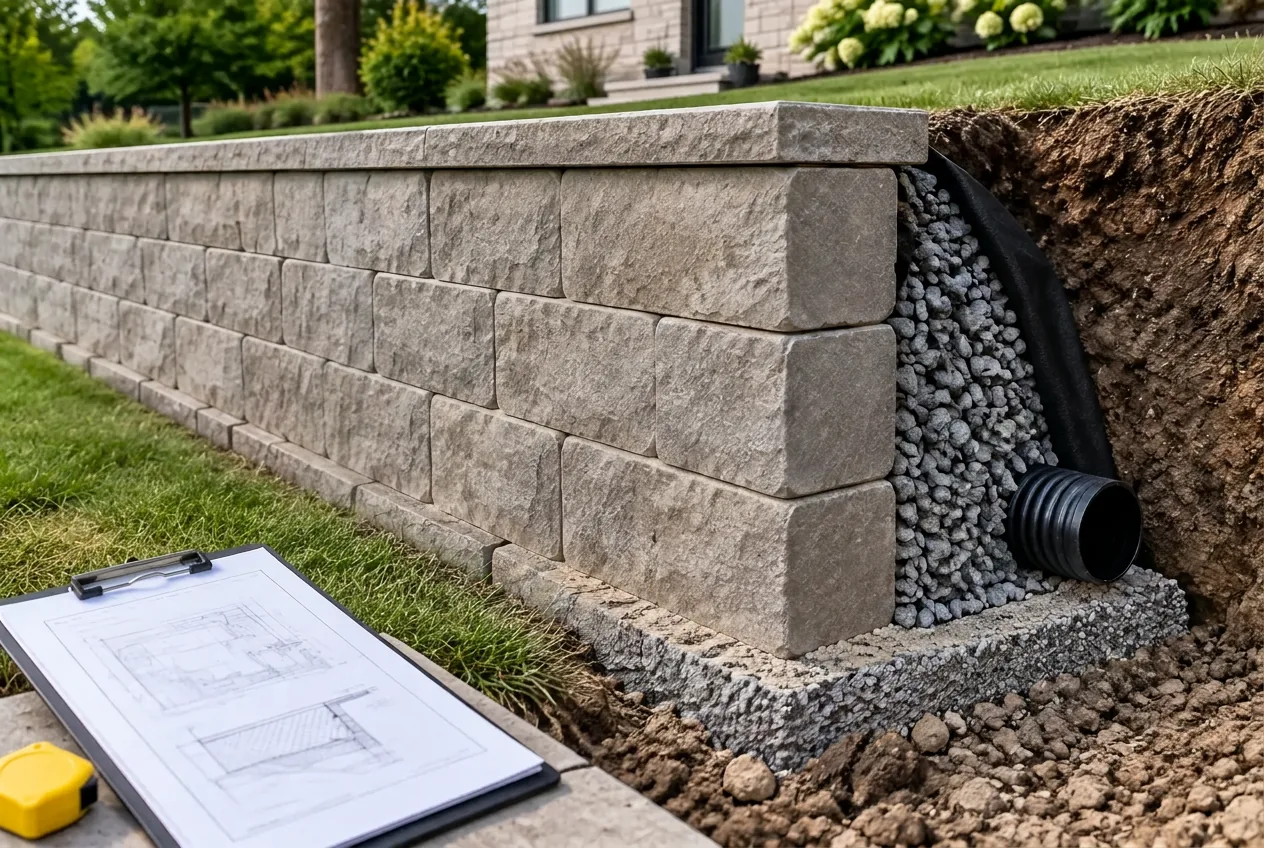
A retaining wall is a designated structure under Ontario rules when it exceeds 1 metre in exposed height and is beside public property, building access or property open to the public. Other building, grading, site-alteration and conservation requirements may apply, so always confirm with your municipality before construction.
What is Ontario’s 1 metre retaining-wall rule?
Ontario’s designated-structure rule captures a retaining wall exceeding 1 metre in exposed height when it is adjacent to public property, access to a building, or property to which the public is admitted. Meeting none of those conditions does not automatically remove every local requirement.
How is exposed retaining-wall height measured?
Exposed height is the vertical distance visible above finished grade at the lower side of the wall. A buried base does not reduce that exposed measurement. Tiered walls may need to be considered together depending on spacing and geometry.
When are engineering and guards required?
Wall height, surcharge loads, slopes, tier interaction and public exposure can trigger engineered design. A guard may be required where a walking surface beside a wall creates a fall hazard; the applicable building authority should confirm the requirement.
- Driveways or parking above the wall
- Structures, pools or heavy loads near the crest
- Steep slopes above or below
- Closely spaced retaining-wall tiers
- Public or building access beside the wall
What local approvals can apply?
Hamilton, Burlington and Oakville may have grading, site-alteration or building requirements beyond the provincial designated-structure rule. Properties near valleys, creeks, wetlands or escarpment features may require conservation-authority review.
Hamilton-area regulated lands may involve Hamilton Conservation Authority. Burlington and Oakville regulated lands may involve Conservation Halton. Always confirm current, property-specific requirements directly with the municipality and conservation authority.
Frequently asked questions
Does every wall over 1 metre need a permit?
The Ontario designated-structure rule includes location and use conditions as well as height. Local rules can still apply, so confirm your specific project.
Can a lower wall need approval?
Yes. Grading, site alteration, easements, conservation-regulated areas and site-specific conditions can apply to lower walls.
Who determines whether engineering is required?
The municipality or applicable authority determines submission requirements; a qualified designer or engineer prepares required structural documents.
Does Conservation Halton review every Burlington or Oakville wall?
No. Review depends on whether the property and proposed work fall within a regulated area.
Is this guide legal or engineering advice?
No. It is general planning information. Always confirm current requirements with the relevant municipality, conservation authority and qualified professional.
Related retaining-wall information
From guide to site plan
Get a site-specific retaining-wall quote
Call (647) 459-7775 or send the essentials.