
 AntoineAsphalt.ca
Retaining wall field guide
Replacing Timber & Railway-Tie Retaining Walls
Old timber and railway-tie retaining walls fail as wood decays, fasteners loosen, drainage clogs and soil pressure pushes the face outward. Replacement should remove unsuitable material, rebuild the foundation and drainage, and use a wall system matched to the site.
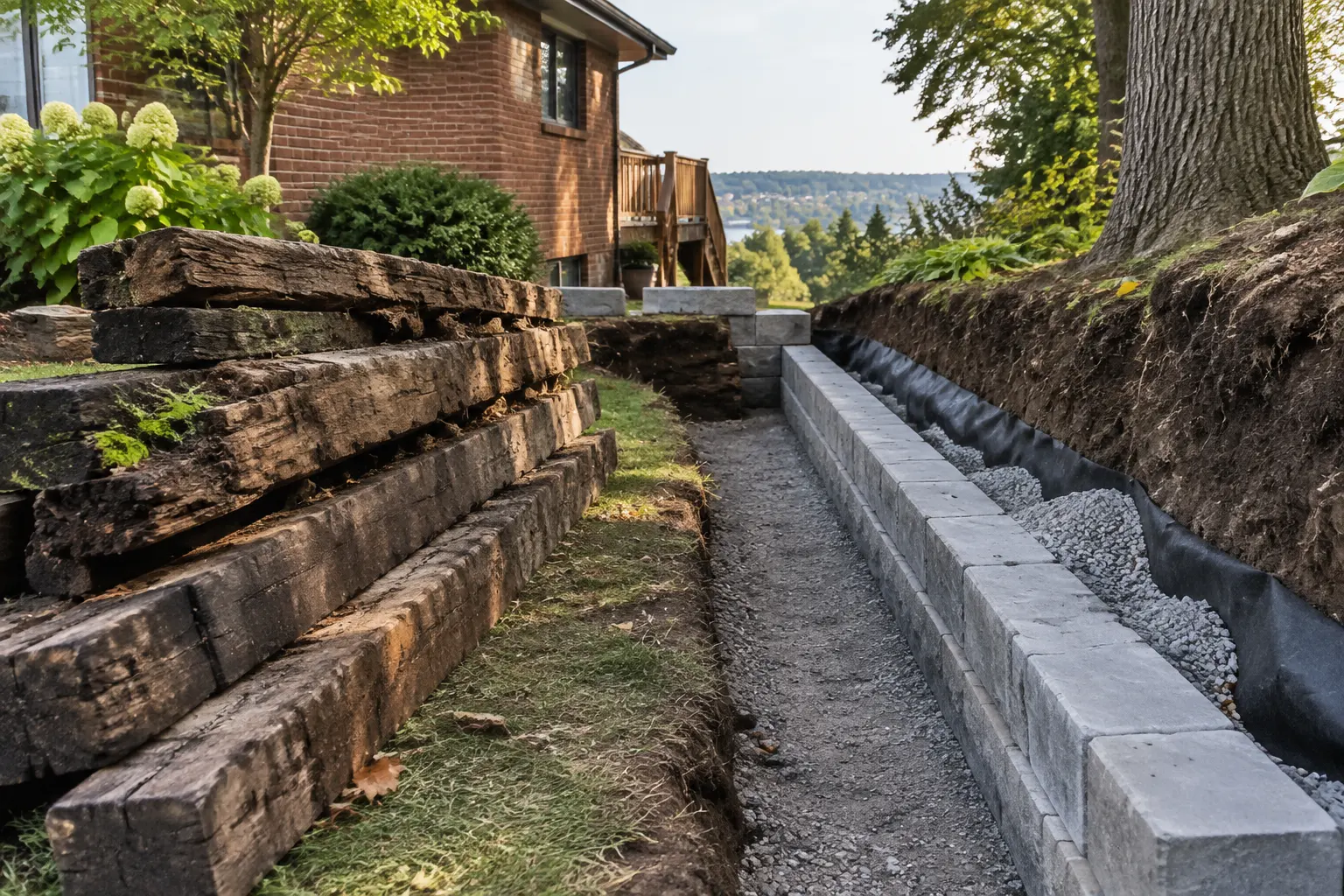
Old timber and railway-tie retaining walls fail as wood decays, fasteners loosen, drainage clogs and soil pressure pushes the face outward. Replacement should remove unsuitable material, rebuild the foundation and drainage, and use a wall system matched to the site.
Why do old timber retaining walls fail in Hamilton?
Moisture, soil contact and freeze-thaw cycles gradually weaken timber. Many older walls also lack modern drainage, separation fabric or adequate anchoring.
- Rot at ground contact
- Loose spikes or failed deadmen
- Water trapped behind the face
- Soil washing through gaps
- Settlement under the first course
- Added loads the original wall was not built to carry
How is a railway-tie wall removed?
The area above the wall is made safe, material is dismantled in a controlled sequence, old timber and fasteners are separated for appropriate disposal, and unsuitable base or trapped soil is excavated. Disposal requirements can vary with the material’s condition.
What can replace a timber retaining wall?
Segmental block offers a compact, consistent face; armour stone creates a broader natural structure; natural stone suits garden settings. The replacement does not need to copy the old wall’s layout if a safer grade or terrace is possible.
What changes when the new wall is built?
A permanent replacement adds a compacted granular base, free-draining backfill, filter fabric, a drainage route and reinforcement where designed. Final grading should keep surface water from collecting at the crest.
Frequently asked questions
Can you reuse old railway ties?
Deteriorated or contaminated ties are generally unsuitable for a permanent rebuild and require appropriate handling and disposal.
Can a timber wall be replaced in sections?
Sometimes, but only when the remaining system is stable and sectional work will not undermine it.
What is the best replacement for timber?
Block, armour stone and natural stone can all work. Height, access, footprint, drainage and appearance determine the best option.
Will the new wall follow the same line?
Not necessarily. Adjusting alignment or creating tiers may improve stability, access and usable space.
Related retaining-wall information
From guide to site plan
Get a site-specific retaining-wall quote
Call (647) 459-7775 or send the essentials.